Another World Is Possible
A Trip to the Art Science Museum
This week, we made our way down to visit Another World Is Possible, an exhibition about how we might imagine the future. Bringing together views on speculative design and future innovations, it showcases work across various disciplines, including agriculture, gaming, world building and more.
To be honest, I went into the exhibition with no expectations whatsoever. Speculative futures? The first thing that pops into my head are flying cars, dystopian skyscrapers, and minimalist white oval-shaped buildings. Clearly, my perception of the future has been warped by the sci-fi and technologist views the media has fed me since young. I believe we all have a certain idealistic opinion of what the future may look like, and I'm pretty sure a huge chunk of this has been heavily influenced by modern cinema, news, social media, and more. To say I'm excited about it is most definitely a no.
Space Station (2023)
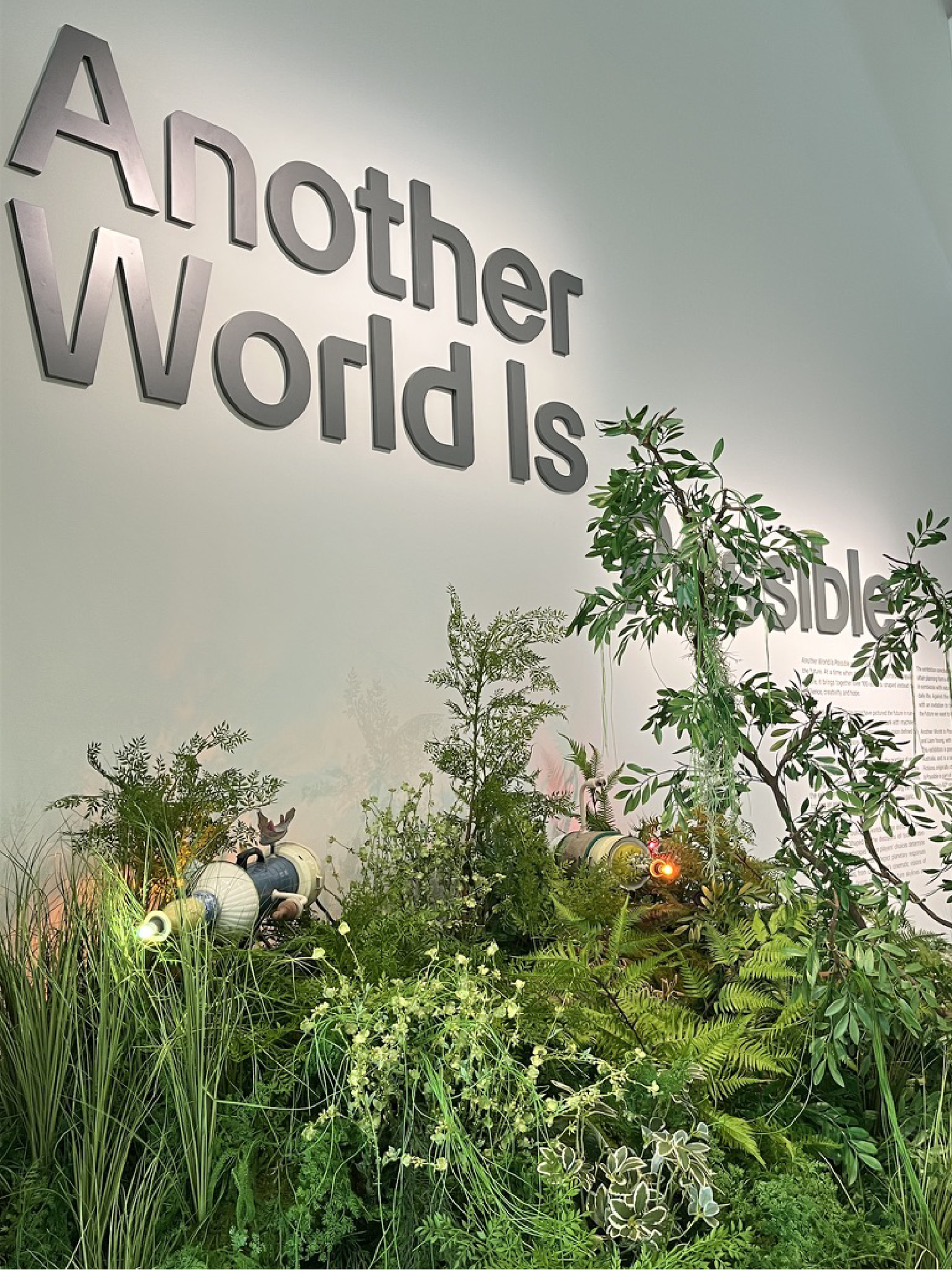
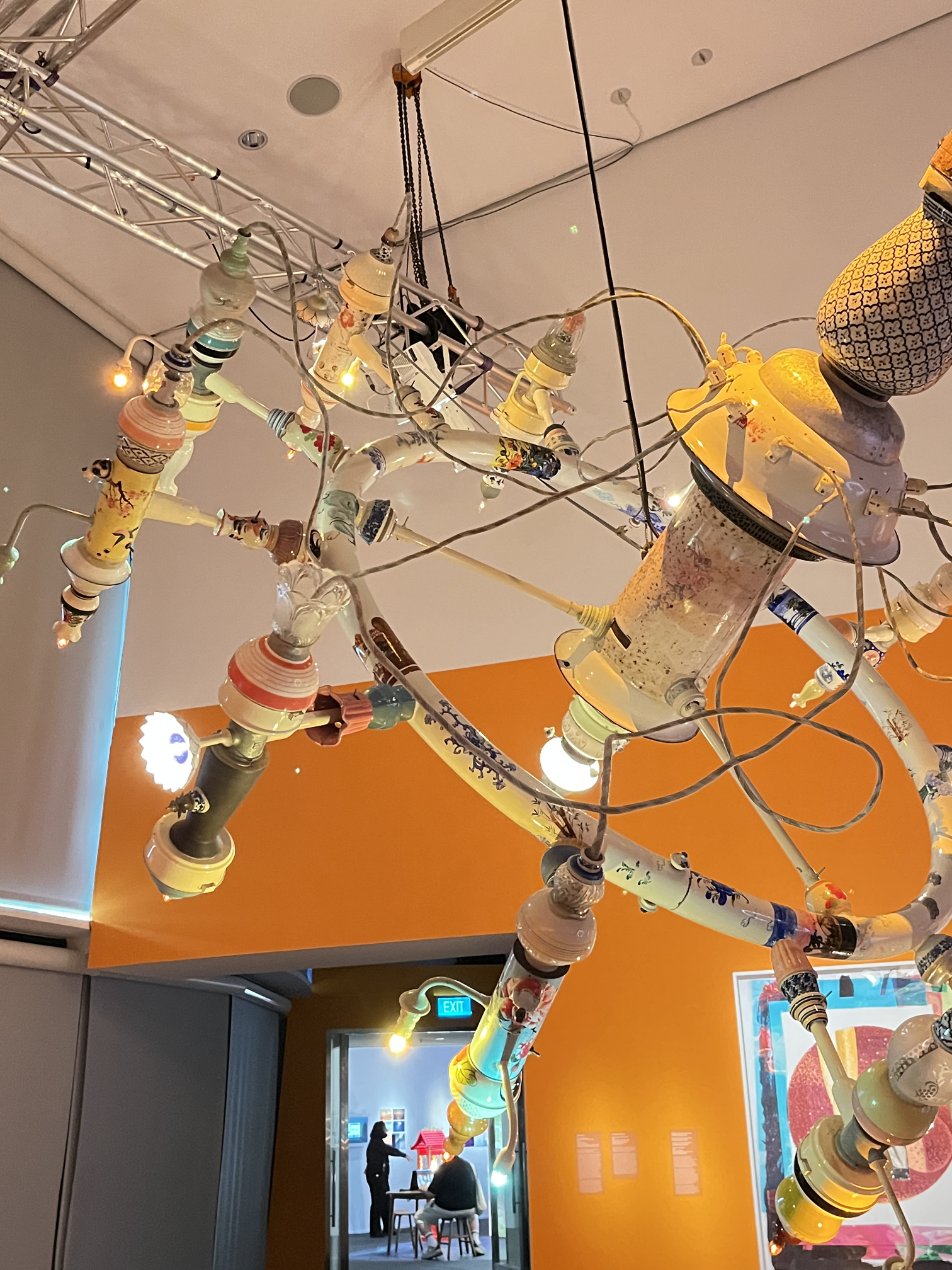
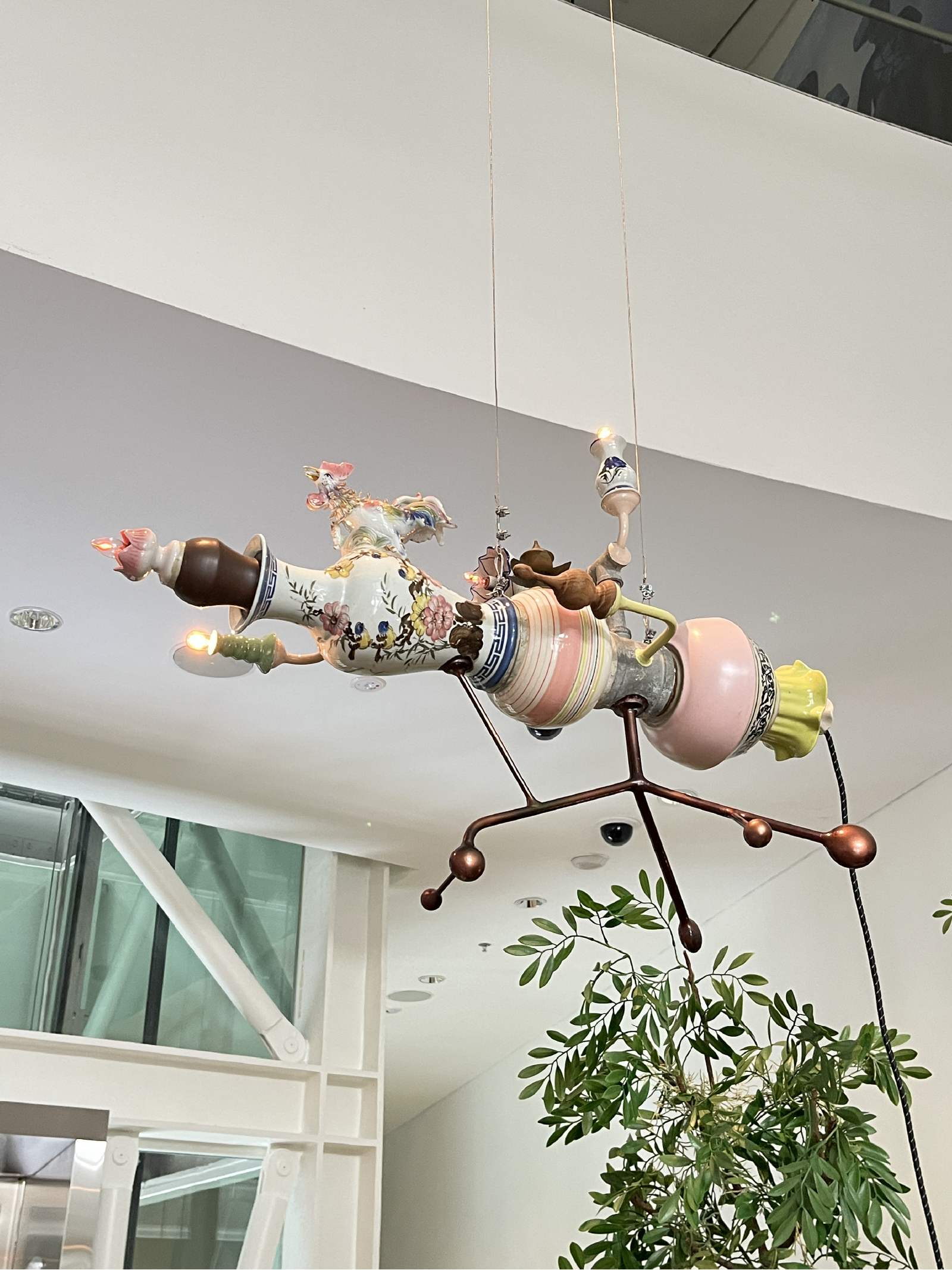
Stepping into the entrance of the exhibition, we were greeted by a lush greenscape, plants, and… spaceships? Spaceships made out of fine china, with hints of Chinese motifs. This first part of the exhibition was certainly intriguing. Blending Asian influence with a futurist object pays homage to our roots while pointing toward the possibilities that lie beyond. Created by artist Torlarp Larpjaroensook, the work titled "Space Station" (2023) spins ordinary items into vessels of the future. What interested me most about this work was the blend of tradition and modernity; it certainly can't function as a spaceship, but it gets us thinking about the thin line between past and present. In blending traditional roots with futuristic stances, this sort of design feels strange and new, yet not entirely rejectable.
Space Station (2023)
In the second section of the exhibition, titled "We Are Authors of the End", I was drawn to the portrayal of futuristic scenes across cinema and TV. Like my earlier point about my own futuristic views being shaped by media and film, this section lays it all out: movies like Blade Runner (1982) and The Matrix (1999) have always dabbled in speculative futures, imagining bleak, sci-fi landscapes or worlds overrun by machinery and ecological ruin. The default view of the future is mostly dystopian – and these films push this narrative, making us more fearful of what's to come.
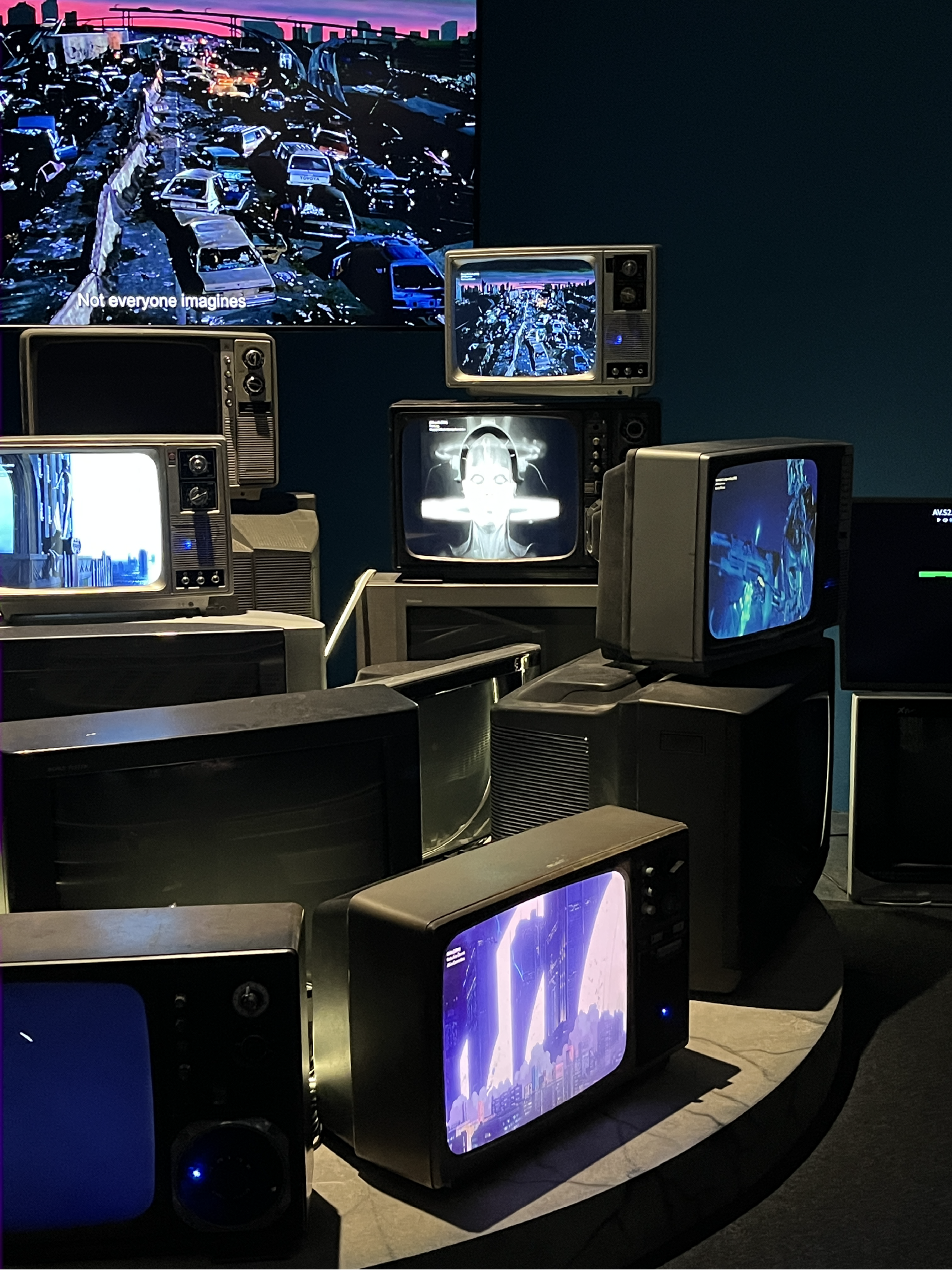
With the stacked setup of television boxes displaying films that portray this bleak futurescape, I found it deeply disturbing yet intriguing—how much power does the media have over us? Why do we hold such a bleak view of the future because of these films? Though not directly related to my topic, this portrayal left a strong impression on me. I stood there for a long time, thinking about the films that shaped my childhood and my views on the future.
Noticing the design of the exhibition
Each section of the exhibition felt quite poetic and flowed well. From the entrance, asking us to pause and consider the balance between tradition and future, to the focus on dystopian media displayed across a stacked lineup of television sets. We begin to understand the influence of media and film on our futuristic views, followed by an introduction to speculative design. Artists and designers contribute many perspectives on the future—writing speculative stories, designing worlds heavy with machinery and imagined possibilities.
This section dives into the imaginative, inviting us to think about our future in a creative, unrealistic way. Afterwards, I thought the section on Afrofuturism tied culture, heritage, and future together quite well. In linking our future with cultural memory and knowledge, what emerges is an interesting blend of tradition and the new. At this point, I felt the exhibition was flowing rather well, like walking through an interactive storybook. The pacing was also suitable, with information fed in well-portioned bits and pieces.
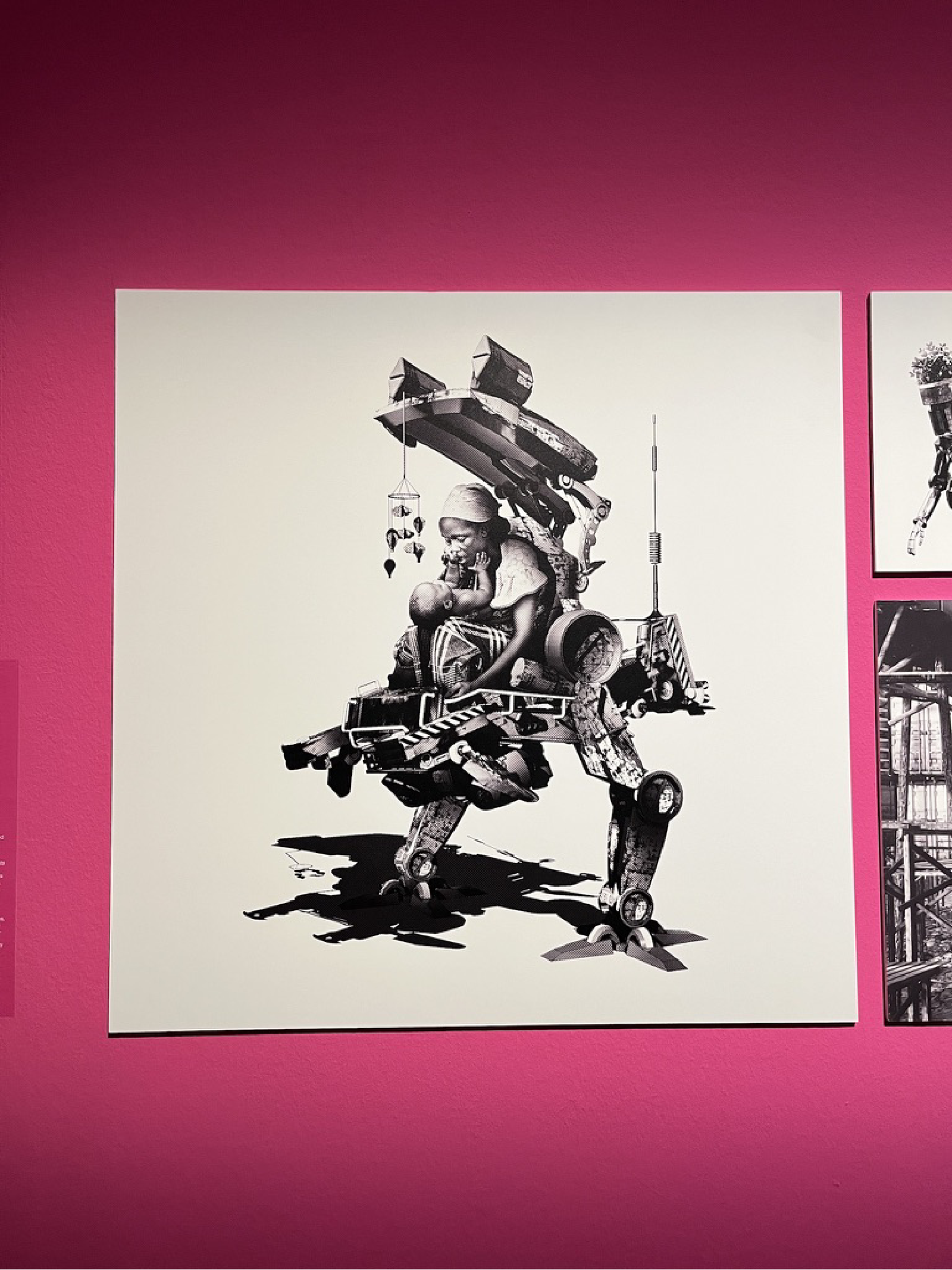
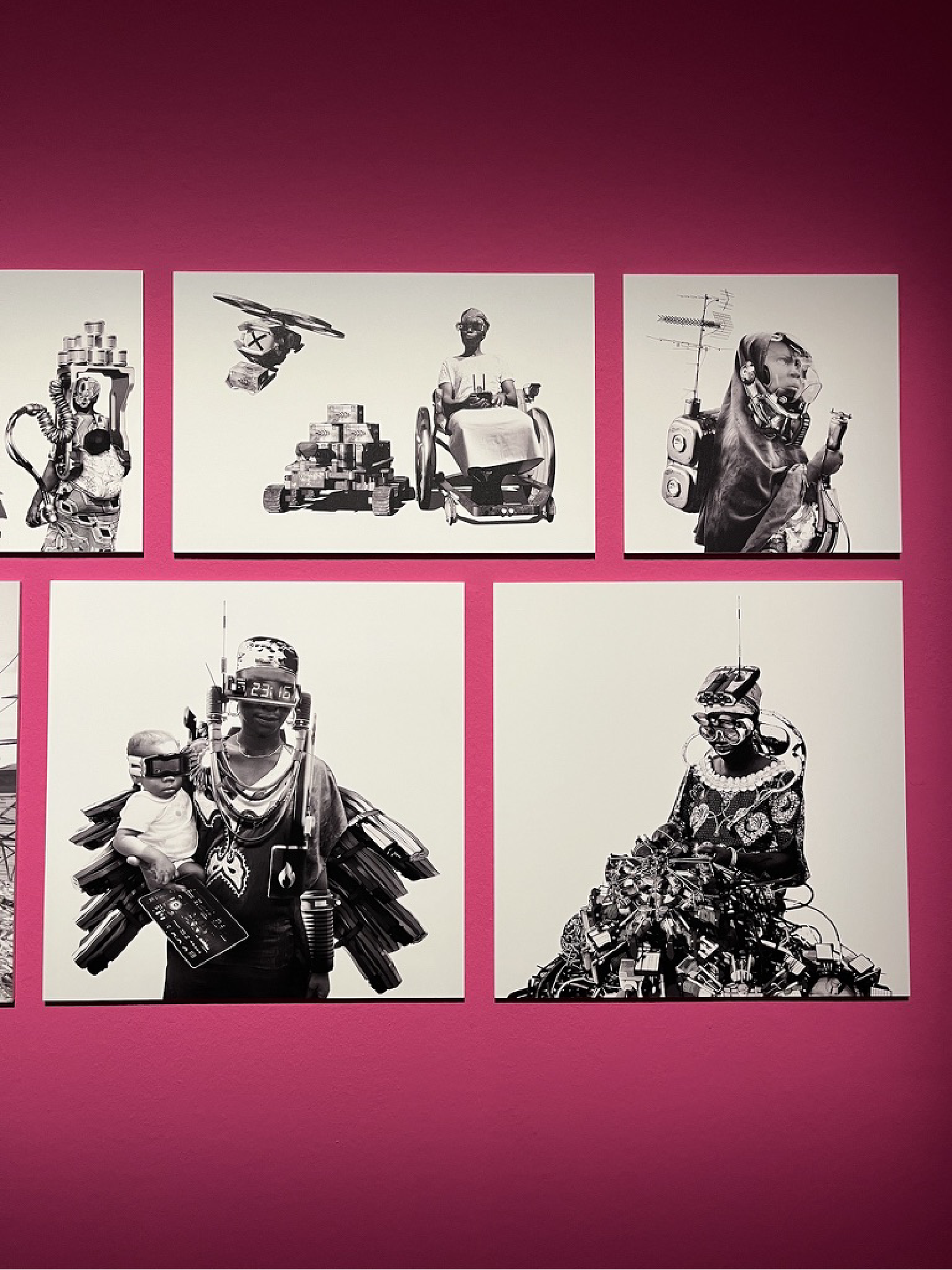
Combining machinery with human
As for the section on video games and speculative game design—that was the point where I slowly felt my attention span draining away, haha. The guide explained why this section was placed near the centre and end of the exhibition: as players, we inform our own decisions and futures through our actions. Through playing these games, we become co-creators of new futures and worlds, forming outcomes based on our own choices. This reflects how our world is changing today. Personally, this section felt a little odd and out of place to me, though the flow was still okay. The final sections touched on speculative futures in imaginative films, before concluding with future-facing products and solutions.
A video game that challenges players to scan supermarket barcodes to defeat robot machines.