Formative Presentation!
A Presentation Of Sorts
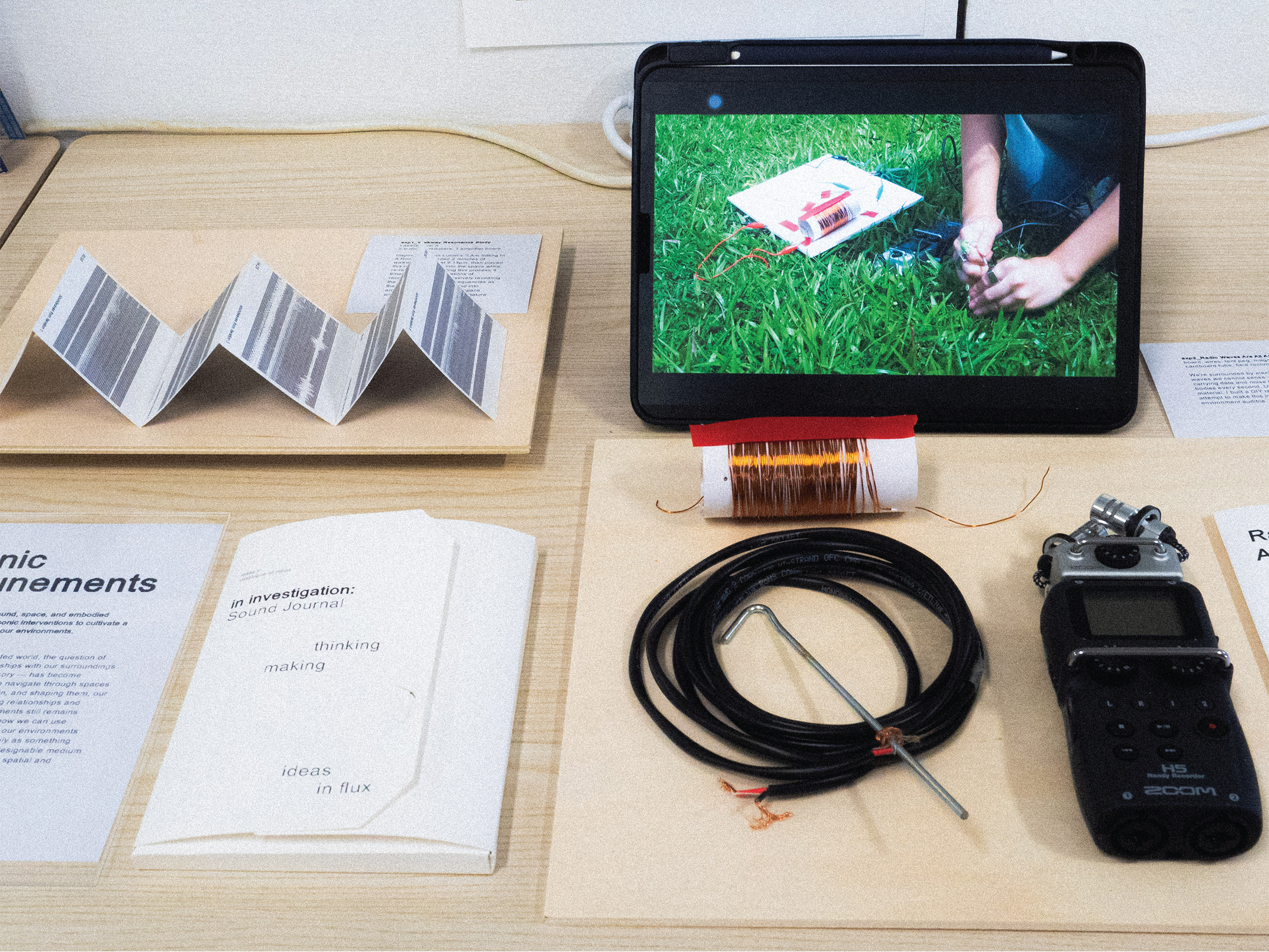
This week, we were tasked with setting up a small presentation of our experiments at our desks. Taking advice from Andreas on my table layout from last week, I changed my approach a little – including acrylic panels, wooden boards, and stands to elevate the look and feel of my work. To make things look more polished and easy to follow, I also created small booklets explaining the three experiments I've completed so far.
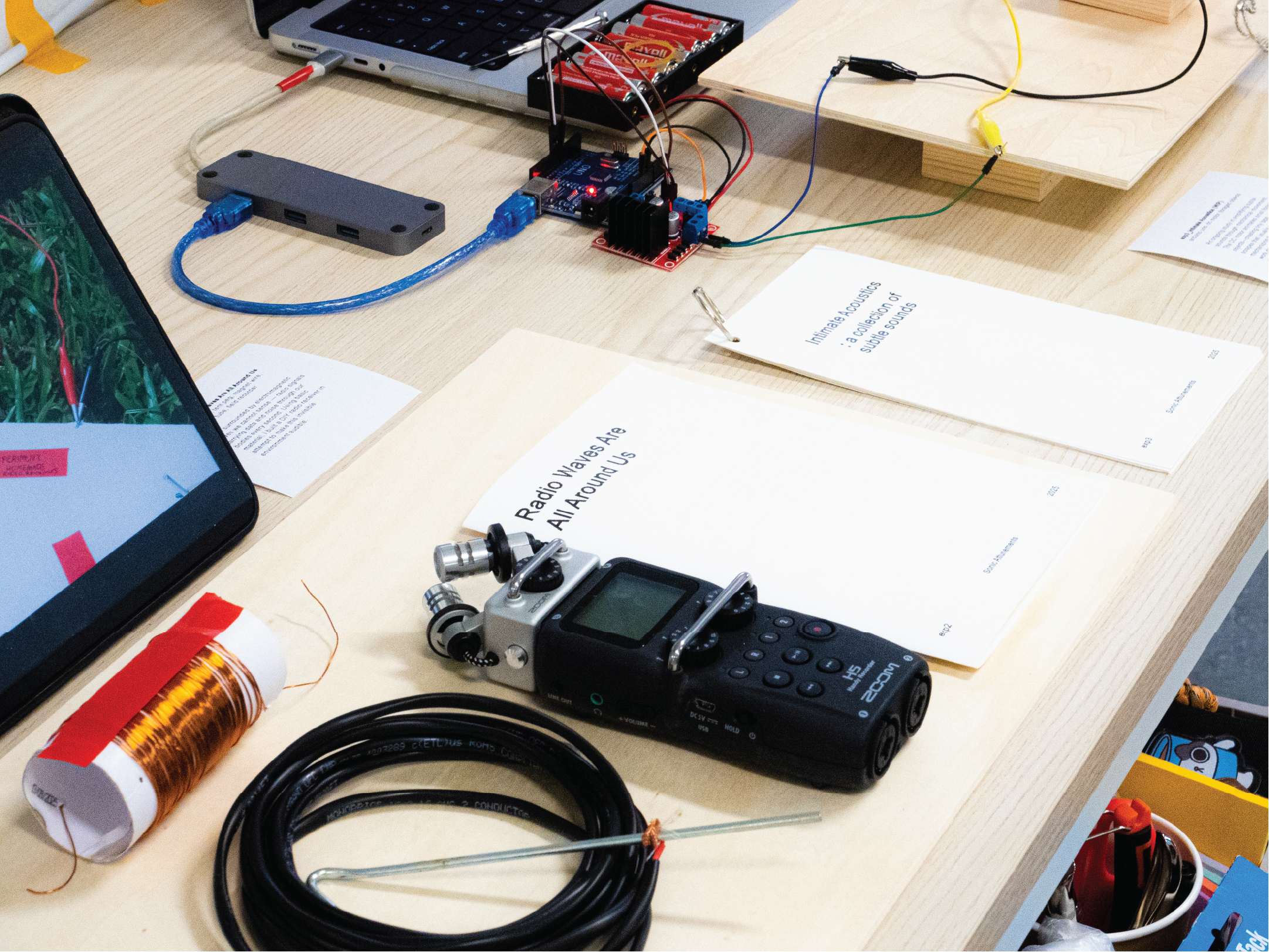
A snippet of my set up
I think I’m quite pleased with the set up I have this week. Everything is split into sections, making things easier to follow. Theres also a proper flow (ish), so viewers know where to start and continue. In the future, I could work on putting my descriptions onto foam boards, or making my desk just a tiny bit neater. (i have way too many stuff)
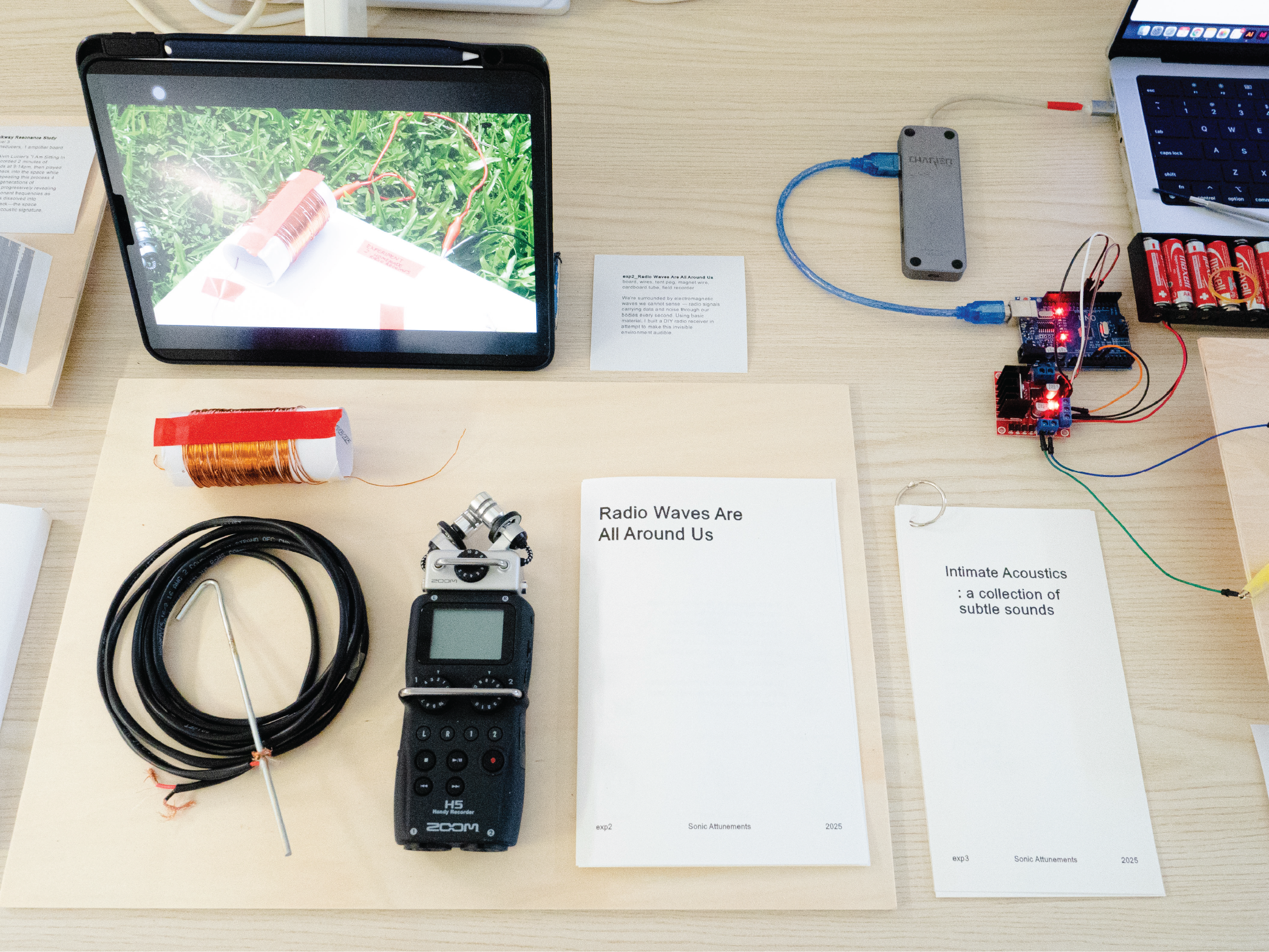
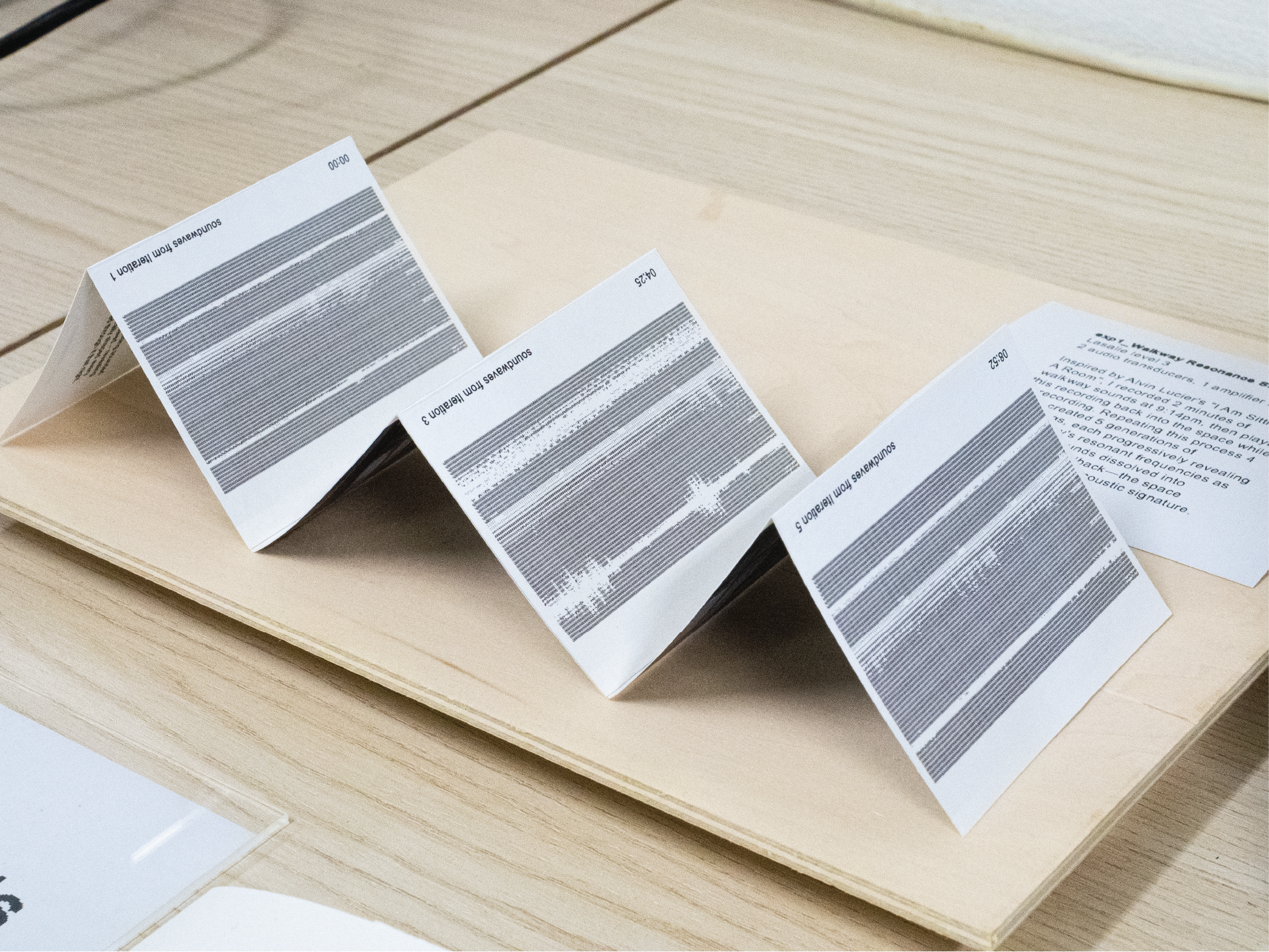
Left: Radio Waves Are All Around Us
Right: Intimate Acoustics
Andreas' Thoughts
When I consulted Andreas, he remarked that he liked the titles of the experiments – each one had a poetic feel to it, guiding him along a journey of “Sonic Attunement”. In terms of the table setup, it was like night and day compared to the previous week, which I was glad to hear. The booklets explaining each experiment focused on the process, which was much appreciated.
Moving forward, it would be helpful to document the materials used in each experiment, as this translates my thought process more clearly to the viewer. The work is not simply the final product – instead, it is the way I present and document it that gives it meaning. Through videos, trials, sketches, and more, the documentation adds character and value to my project. After all, we're here to design; the end goal is not simply the product, but the process itself.
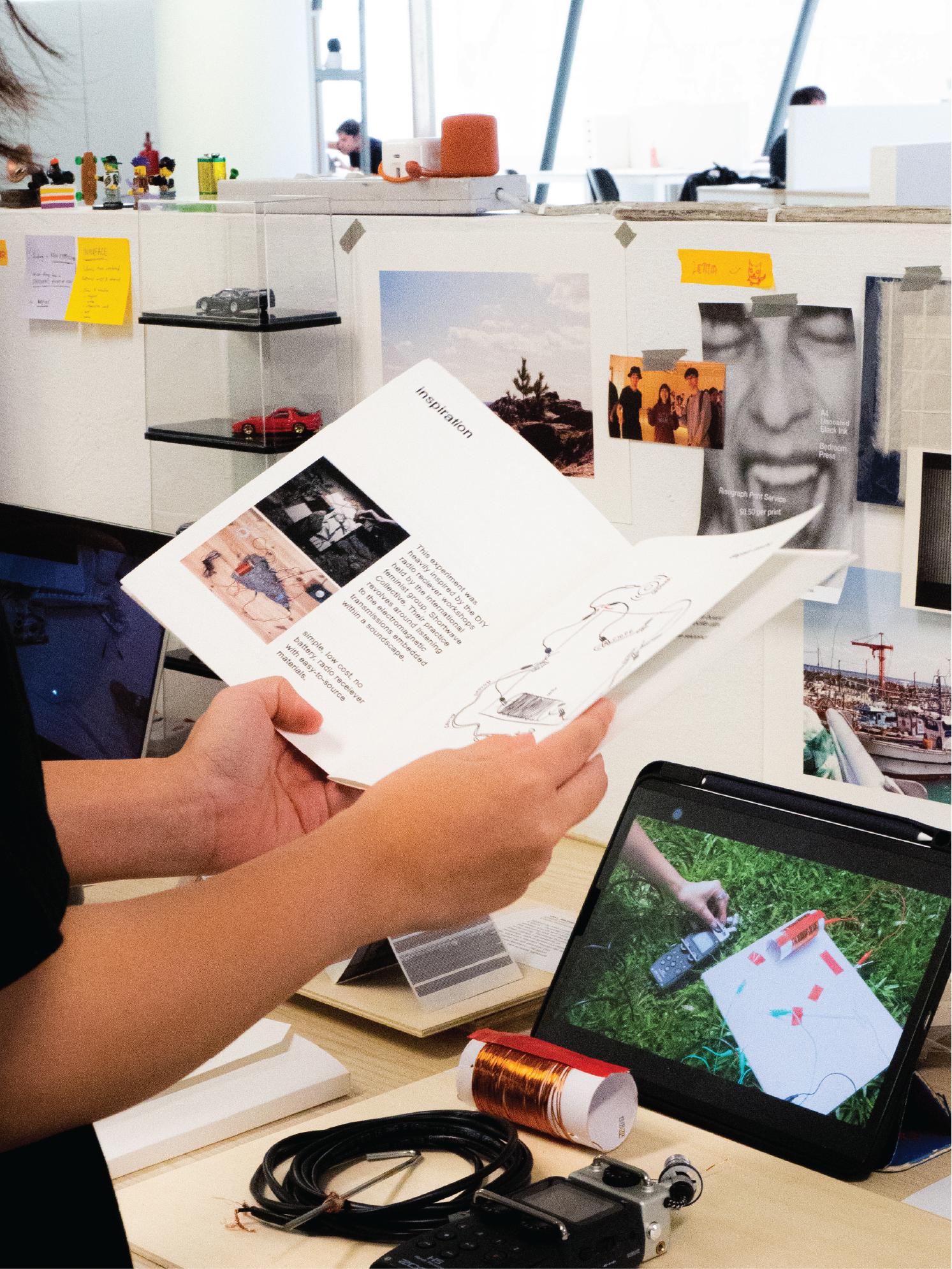
A coursemate reading my booklet
To nitpick on the tiny details, my booklet for Experiment 1 (Resonant Walkway Study) was too small, and the presentation was too abstract. To the average layman, they would not understand this experiment. Readability wise, the words could afford to be bigger as well.
Summing it up, Andreas noted that I could become a storyteller through my design practice, as the way I present things hints at an unfolding narrative. By feeding audiences small stories and glimpses into my experiments and concepts, my work becomes an expansion of traditional storytelling, making my project easier to relate to.
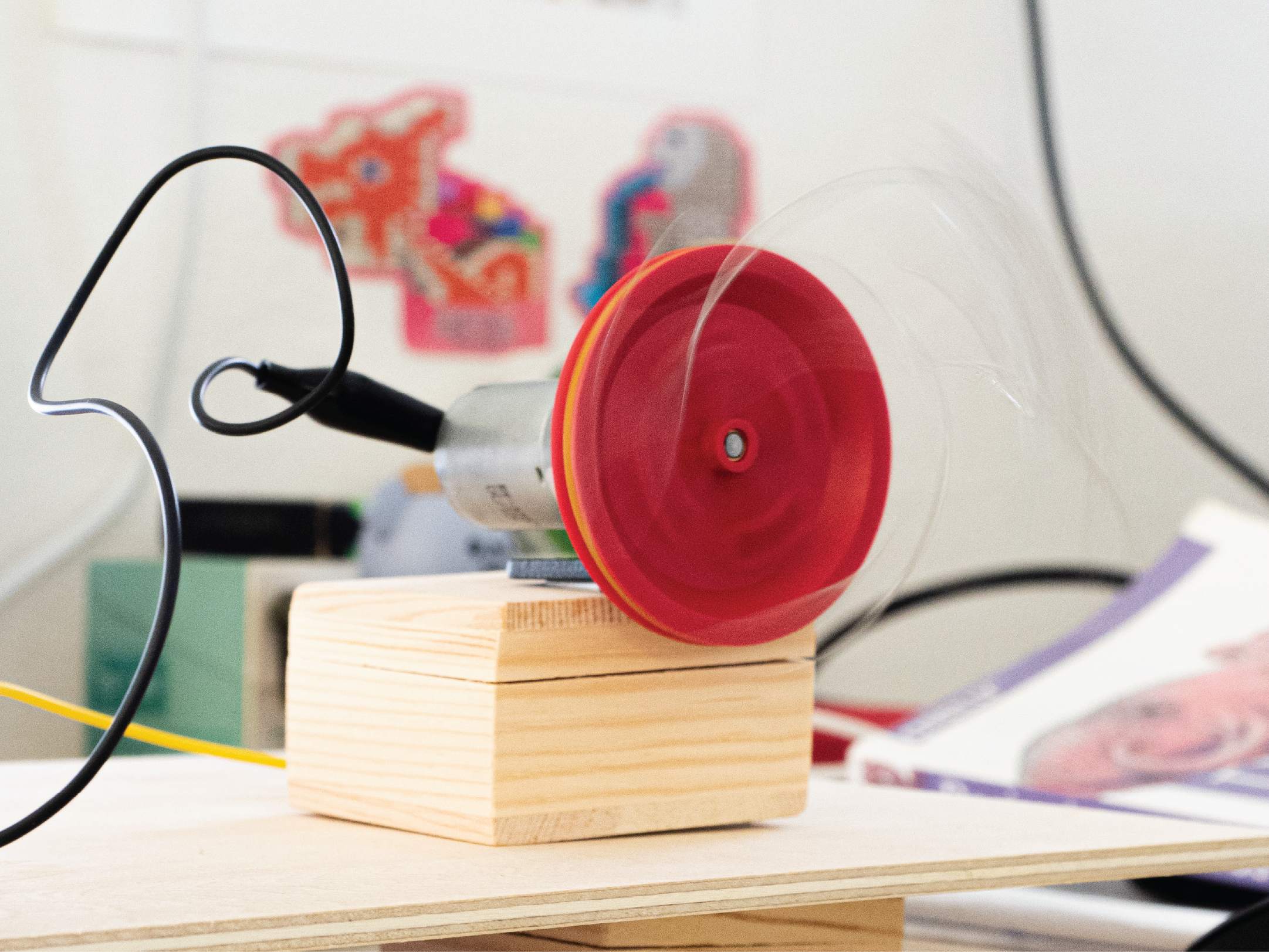
Tiny sounds in action;
Using a 200 RPM DC motor and gear to slide a piece of wire against the board, creating shuffling sounds
Looking at my tiny sound experiment, Andreas had some remarks. From an electronics point of view, it has some potential. However, producing and configuring these tiny sounds would take time; it might take 3, 6, 12 months to get my desired result.
I certainly agree with this. I haven't worked on it much yet, but I was already running into problems: what sounds did I want to produce? What materials should I use? How would I attach them to the gears?
He suggested experimenting with different inputs and outputs using actuators, which might yield something interesting and unique. Even piezo microphones could pick up subtle sounds no one has heard before. All of this could manifest as a sort of toolkit for sound recordings—producing subtle, strange, "unheard" sounds.
From there, I could branch out to the public, conducting workshops for people to create their own sounds and sonic drawings, which could become a publication. Or participants could plug them into software to create their own personal interpretations.
A Talk by the folks from Design Factory @SIT
This week, Aditi Neti and Jeffrey Koh from Design Factory @SIT came by to share their work and offer advice on our projects. Aditi is a creative technologist who graduated from Lasalle in 2023, while Jeffrey is the head of Design Factory, leading the creative direction of the projects currently taking place there. At SIT, they do experience design, collaborative design, UX/UI and more, as part of the DFGN (Design Factory Global Network). Their positioning? Focusing on helping society, and translating client ideas into business opportunities.
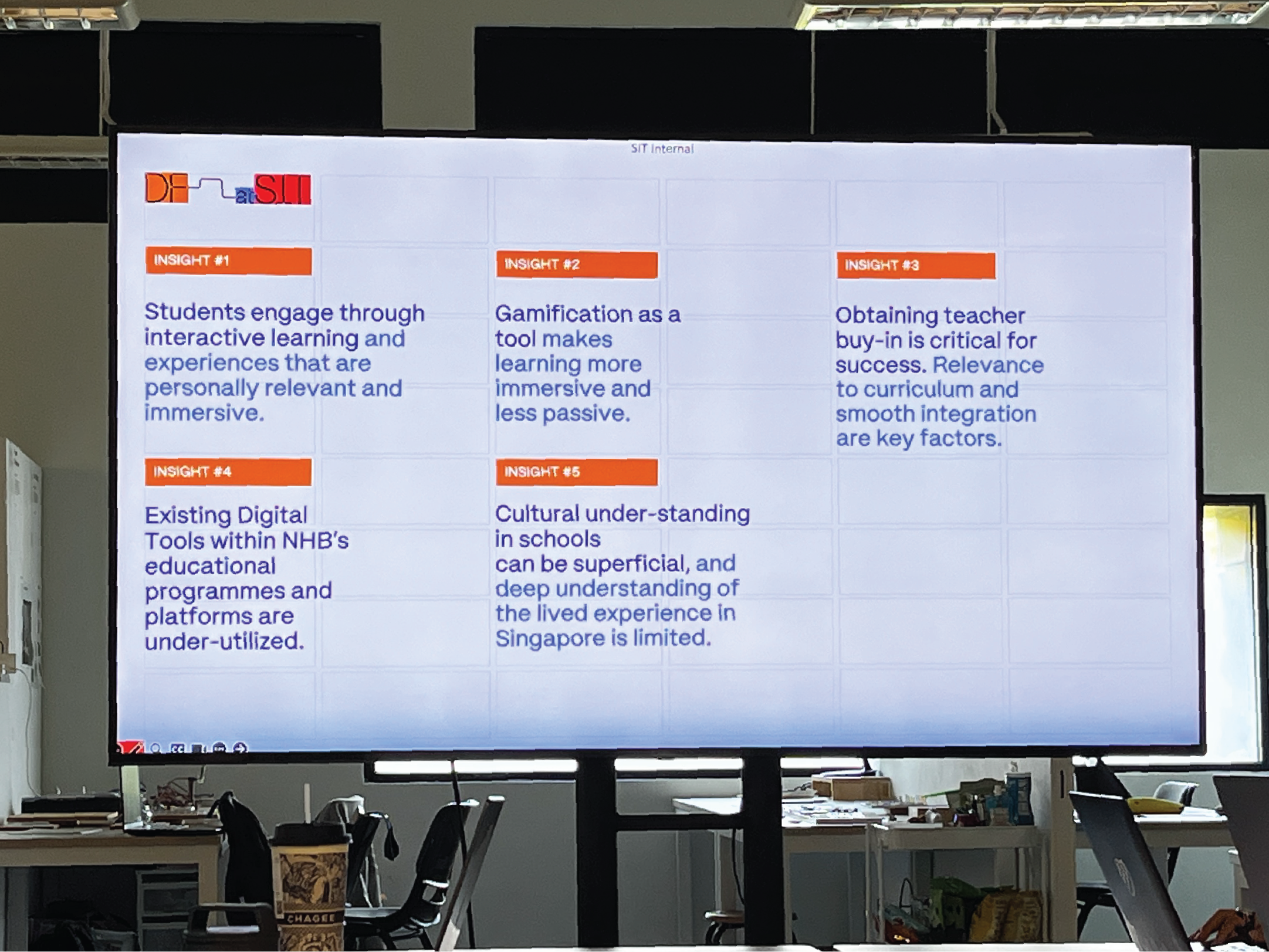
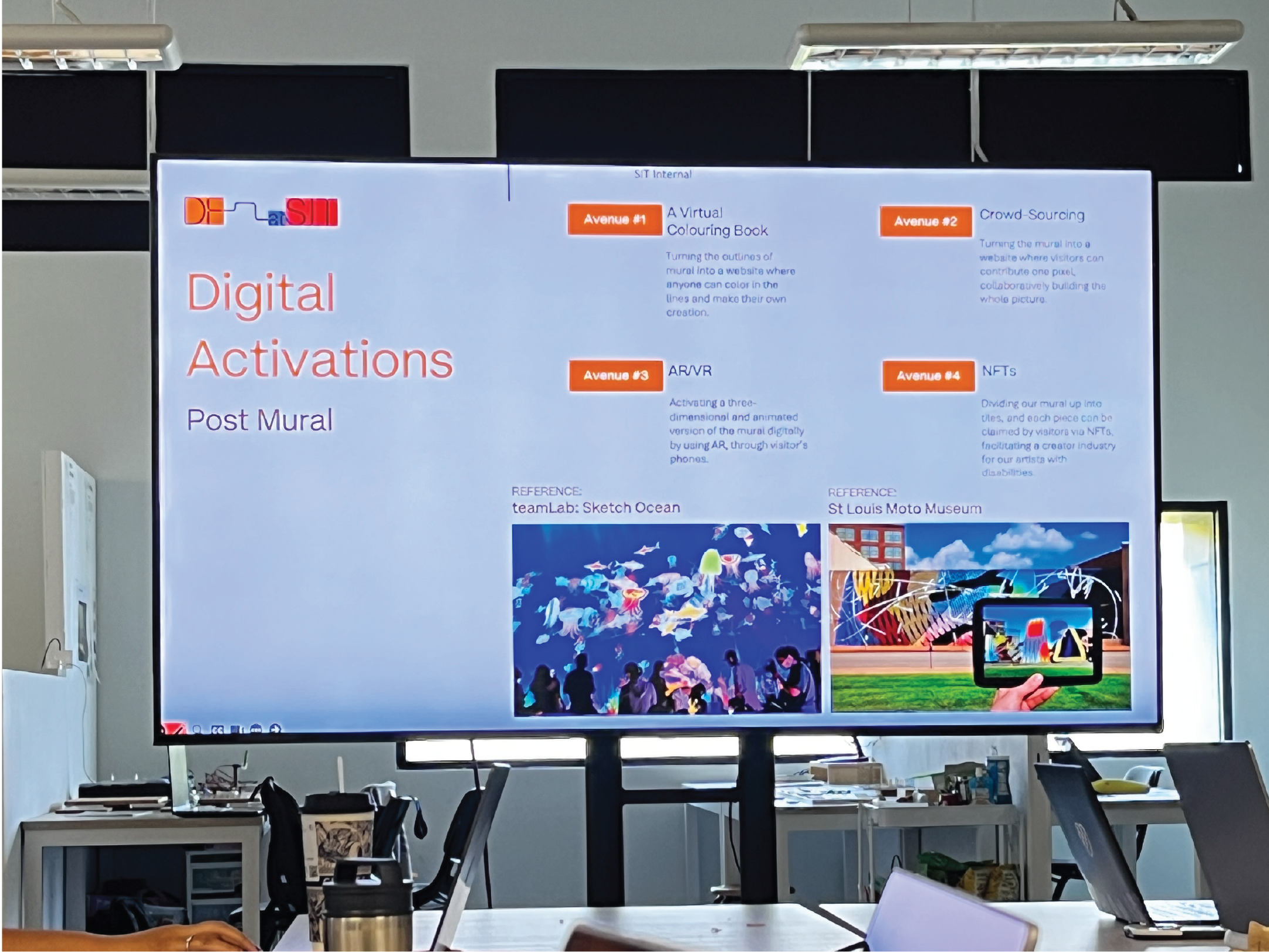
Slides explaining their insights and working process
What really stood out to me was how the team focuses mainly on the prototyping stage, placing stronger emphasis on user testing, modelling,
and getting the product ready before commercialization. Thinking about it, the work Design Factory does feels very similar to the Computation In Design atelier; they try to make sure our interactions with technology is not bland, and doesn’t stray too far from the meaning of the project itself.
As the talk progressed, Jeffrey emphasised on the importance of co-creation, collaboration and community engagement. As designers, we hear the word “collaboration” all the time; how does this come into play in projects?
Creating a mural for Punggol Digital District Mural
Approximately 130 metres long, the mural was what Aditi described as a "conflux of all systems together"—a five-month project aimed at strengthening community ties and fostering co-creation. To be very honest, when I heard mural, I was a bit iffy. The mural we all know is the painted kind; how will it relate to technology? But as Aditi explained along the way, it gathered diverse members of the community together:
(1)
People who use the Punggol Digital District, for valuable feedback and insights.
(2)
Artists with disabilities, to contribute to the mural with their art
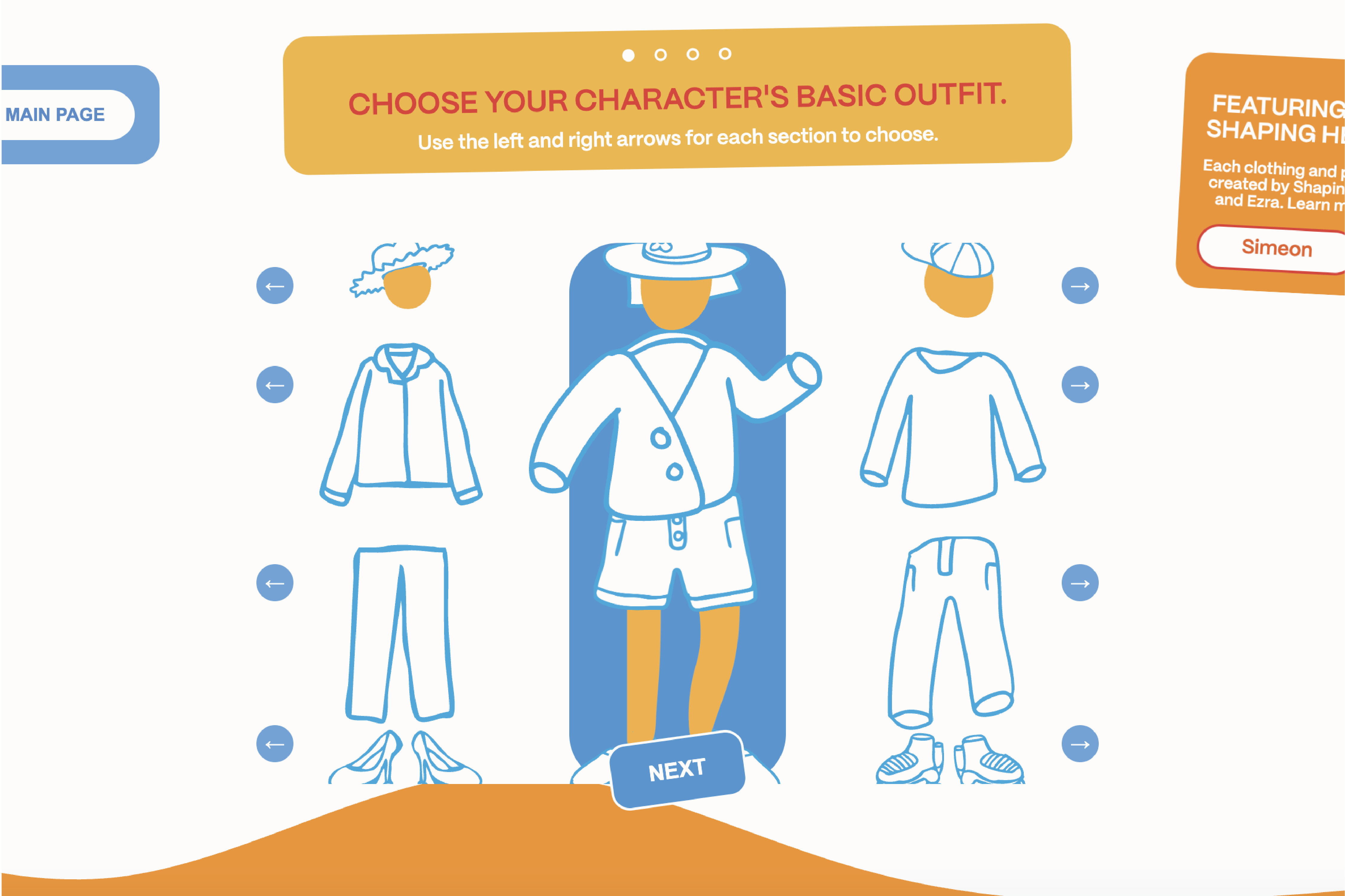
A snapshot from People of PDD website
The artists, Simeon Tan and Ezra Chan Yi, contributed hand-painted artwork to the mural. Through workshops held by the Design Factory team, insights and ideas from the community were contributed to the final piece. An online platform also allowed people to create their own PDD character; through customisation, everyone has the chance to co-create and contribute to
the mural.
Eventually, through participatory design, stronger bonds are fostered between caregivers and artists, while empathy and trust among residents are strengthened. It's amazing how co-creation can bring together so many ideas and possibilities from members of the community.
Some Thoughts!
This reminded me of something I tend to forget: the importance of collaboration in design. With this graduation project being an individual one, I often overlook the potential of engaging others' perspectives to shape my own thinking. The talk was certainly a good reminder!